Beef Jerky Vs Biltong: How To Choose Between Them
Beef jerky and biltong are not interchangeable snacks. They are fundamentally different products made by different methods, and buying the wrong one because you assumed they were basically the same thing is the most common mistake first-time buyers make. Jerky is cooked, often glazed, and frequently smoked, producing a sweet-smoky character and a longer sealed shelf life. Biltong is air-dried raw with salt and spice, never cooked, delivering a cleaner ingredient label, a savory-to-spiced flavor profile, and no added sugar in the base blend. The right choice comes down to four things: your dietary goals, your flavor preferences, how you plan to store and use it, and whether kosher certification matters to you.
The Decision Most Buyers Skip: Format Comes Before Flavor
Every buyer's guide you'll find online starts with macros or flavor profiles. That's the wrong starting point. Format is the upstream decision that controls the experience before flavor ever enters the picture, and it's the one dimension that genuinely separates biltong from jerky in ways you can't compensate for after the fact.
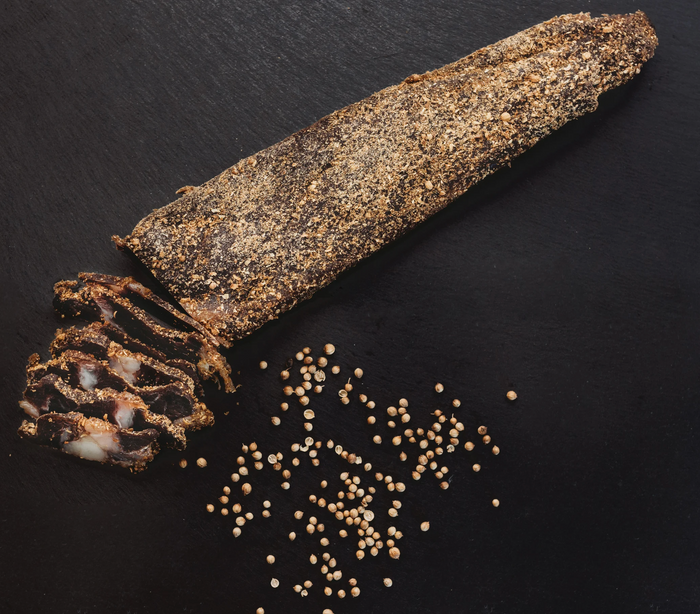
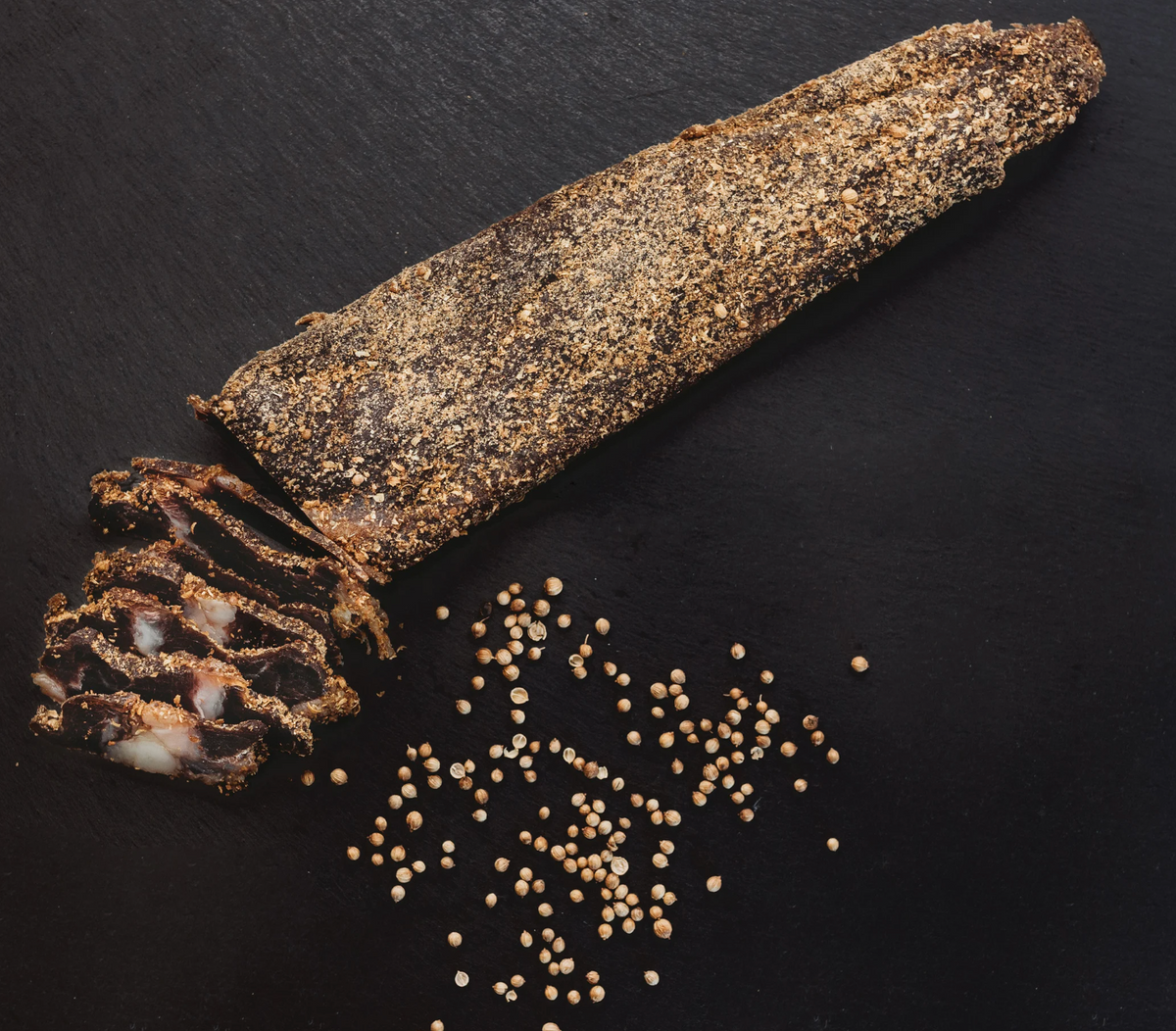
Pre-cut jerky arrives at a fixed thickness, a fixed chew, and a fixed texture intensity. That is the whole experience. There is no adjustment available to you once the package is open. Biltong slabs, by contrast, give you something jerky structurally cannot: the ability to slice to your own preferred thickness on the spot. Cut thin and you get a drier, more intense bite. Cut thick and the texture opens up, denser, more tender, with a chew that holds rather than tears. That is a meaningful control point, and it matters if texture is a dealbreaker for you.
The slab format has a second consequence buyers rarely think about: an uncut slab delays oxidation until the moment of slicing. Pre-sliced product, whether biltong or jerky, exposes surface area to air from the moment it's cut. The slab preserves flavor integrity longer precisely because it stays sealed until you decide to open it. If you're buying in volume or planning to store for more than a few days before finishing a bag, the slab format is worth considering for that reason alone.
Beyond slabs, the biltong format map looks like this. The Sliced Biltong Mini's at $4.99 are the entry point, small bags, pre-sliced, designed for first-time buyers who want the least commitment possible. The standard Sliced Biltong at $11.99 is the everyday format in a 3 oz bag. The Bulk Biltong at $58 for a full pound is where the per-ounce price drops significantly, built for buyers who already know their flavor and are past the sampling stage. The Biltong Sampler Pack at $12.99 exists specifically for the buyer who wants to run a blind taste and texture test across the whole range before committing to any volume at all.

Jerky doesn't give you this decision tree. You pick a flavor, you pick a size, and that's the product you get. The Hickory Kickory Dock Big Piece Jerky at $18.99 for 6 oz is built for a specific experience: a large-format, tear-into-yourself piece with a smoke-forward flavor and a fixed chew. That's the full range of control available. Neither outcome is wrong, but understanding which format matches how you actually eat is worth doing before you decide which product category to buy into.
How the Production Method Shapes What You're Actually Eating
Jerky's production runs through heat. The beef is marinated, then cooked at temperature, often with a smoke stage, then glazed. That sequence is what gives jerky its characteristic sweetness and its sealed surface texture. It is also what allows certain kosher certifications to be achieved more reliably on the cooked surface, Glatt Kosher certification, which our jerky line carries, is a meaningful distinction for dietary-observant buyers. If Glatt Kosher certification matters to you, our jerky range is where to look.
Biltong's production runs through salt, vinegar, and air. No heat is applied. The beef hangs and dries over days, with the salt and acid doing the preservation work rather than a cooking stage. That minimal-processing sequence produces something the cooking-and-glazing chain can't: a cleaner label. When you read the ingredient list on our Original biltong, there is no added sugar, no glaze, no smoke flavoring. Salt, spice, vinegar, beef. That's the whole list. For buyers who make decisions based on what's not in the product as much as what is, this distinction traces back to production method, not marketing language.
The nutrition picture reflects that difference directly. A 3 oz bag of our Sliced Biltong delivers around 36 grams of protein and approximately 240 calories, with zero added sugar and near-zero carbohydrate in the Original blend. The protein structure is preserved by the air-drying process rather than broken down by heat. Which matters if you're using beef snacks as a serious protein source rather than just a snack. Jerky's cooking stage concentrates protein too, but the added sugars in most glazed formulations push the carbohydrate count up in a way biltong doesn't.
Jerky does carry one genuine technical advantage: the glazed, cooked surface creates a longer sealed shelf life than air-dried biltong's unsealed surface. For buyers who need a snack that can sit in a bag, a car glove box, or an emergency kit for extended periods, that is a real point in jerky's favor, not a marketing claim. The trade-off is the glaze, the smoke, and the sugar load that come with it. Working backwards through the production method tells you exactly what you're getting in both directions.
Flavor Profiles and What They're Actually Good For
Jerky and biltong are not competing for the same eating occasion. This is worth saying plainly, because the conversation usually frames it as one being better than the other, when the more accurate framing is that they satisfy different things.
Jerky is sweet, smoky, and built for snacking in the conventional sense. The Hickory Kickory Dock profile is smoke-forward with a sweetness that comes from the glaze, and the eating experience has a candy-like quality that is genuinely satisfying if that's what you're after. It is not a subtler flavor. It is not meant to be. If your snacking habit runs toward bold, familiar American barbecue flavors, this is a reasonable product for you.
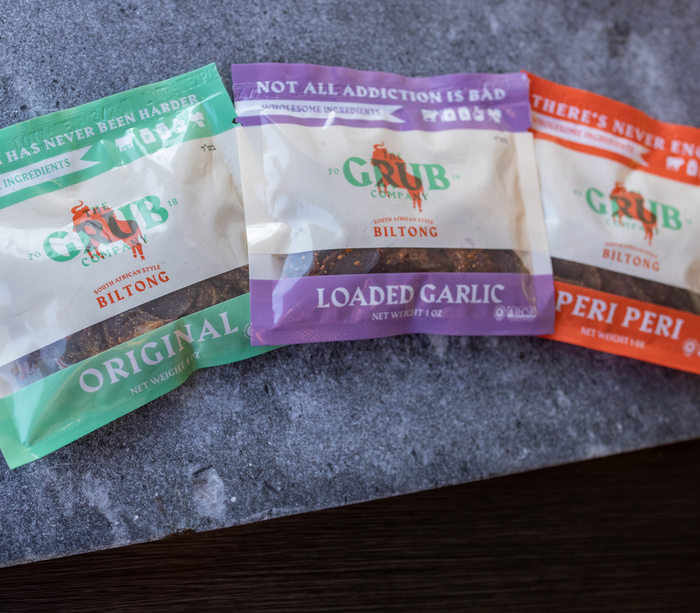
Biltong's flavor map is built on spice and herb intensity rather than sweetness. Original is clean and savory, with the vinegar notes from the curing process sitting in the background rather than dominating. Peri Peri introduces heat. Loaded Garlic runs toward the aromatic end. None of these profiles are sweet. None of them are smoke-flavored. The contrast with jerky is not a gradient. It is a categorical difference in what the product tastes like and what food occasion it fits.

That flavor difference matters for where you use each product. Biltong sits well on a charcuterie board precisely because it doesn't compete aggressively with other ingredients, plan roughly 2 oz per head if it's one element among others, 4 oz if it's the main thing people are eating. Jerky's bolder, sweeter profile tends to dominate a board rather than complement it. Conversely, if you need something that satisfies as a standalone snack with no accompaniment, jerky's assertive flavor profile does the job without needing context. Biltong can sit quietly on a board, jerky announces itself.
The Practical Decision: Who Should Buy Which
If you've read this far, you likely already have a sense of which product fits your situation. Here is the unambiguous version.
Buy biltong if your priority is a clean ingredient label with no added sugar, a high-protein snack with near-zero carbohydrate, and a flavor profile that runs savory rather than sweet. Buy biltong if you want texture control, either through the slab format or by working through the sampler pack before committing to a full pound. Buy biltong if you're in a kosher household and working with the range of kosher-certified options available across our product line.
Buy jerky if you need Glatt Kosher certification specifically, because that's where our certified-kosher jerky lives. Buy jerky if you want a bolder, smoke-and-sweet flavor that works as a standalone snack with no context required. Buy jerky if extended shelf life matters for your use case, travel, emergency storage, keeping something in a bag for weeks without thinking about it.

If you genuinely don't know which way you lean yet, the Biltong Sampler Pack at $12.99 is the right starting point. It gives you the full flavor range in the smallest amounts that actually tell you something. Committing to a pound of a single biltong flavor before you've tasted any of them is the most common version of a first-order mistake, and the sampler exists precisely to prevent it. If you're in Ormond Beach, local pickup is typically ready within 24 hours. If you're ordering online, the same sampler ships and arrives ready to eat.
Neither product is a shortcut to the other. They are different things, made differently, tasting differently, and built for different priorities. The choice you make should trace back to what you actually want, not to which one has the more convincing marketing language on the label.
A few things people ask us before they commit to one or the other. Here are the honest answers.
Frequently Asked Questions
Is biltong actually healthier than beef jerky?
It depends on what you mean by healthier. Biltong carries around 36 grams of protein and roughly 240 calories in a 3 oz bag, with no added sugar and near-zero carbohydrate in the Original blend. Jerky, particularly glazed, smoked varieties, typically includes added sugars from the marinade and glaze stages. If your priority is minimal ingredients and no sugar, biltong has the cleaner label. If your priority is a leaner fat profile, jerky's cooking process reduces some of the fat that biltong retains. Neither is universally healthier. The answer depends on which macros you're managing.
What does biltong taste like compared to jerky?
Biltong is savory, slightly tangy from the vinegar curing, and spice-forward depending on the flavor you pick. It is not sweet. Jerky, particularly smoke-glazed varieties, is bolder and sweeter, with a candy-like quality that comes from the marinade and glaze. If you've only eaten jerky, biltong will taste noticeably less sweet and more herbaceous. The contrast is real. Neither is a substitute for the other at the flavor level. They are genuinely different eating experiences.
Which one is better for a keto or low-carb diet?
Biltong is typically the better fit. The Original blend has near-zero carbohydrate and no added sugar, which means it doesn't require any macro accounting beyond the protein and fat content. Jerky varies considerably by brand and formula, the cooking and glazing stages often introduce sugar, and some jerky products carry 5 to 10 grams of carbohydrate per serving. If you're tracking net carbs, check the label before assuming any jerky is keto-compatible. Biltong's Original blend removes that guesswork.
Does biltong have Glatt Kosher certification?
Our jerky line carries Glatt Kosher certification. Our biltong is kosher, but Glatt Kosher certification is more reliably achieved on a cooked product surface than on biltong's raw air-dried method. If your household's kosher standard requires Glatt specifically, our jerky range is the right product to look at. If kosher certification matters but Glatt is not a requirement, our biltong range has options across the catalog.
How long does biltong last compared to jerky?
Jerky's glazed, cooked, and sealed surface gives it a shelf-life edge for extended storage. It is the right choice if you need something that can sit in a bag or vehicle for weeks. Biltong's air-dried surface is not sealed the same way, so once a bag is open, consuming it within a few days gives you the best texture and flavor. Biltong slabs delay oxidation longer than pre-sliced biltong because the surface stays sealed until you slice it. Which is a meaningful advantage over pre-cut formats if you're buying in volume and not eating all at once.
Should I start with the Biltong Sampler Pack or just buy a full bag?
Start with the Sampler Pack if you've never eaten biltong before. At $12.99 it gives you the full flavor range in the smallest quantities that actually tell you something useful. Enough to know whether you prefer Original, Peri Peri, or Loaded Garlic before committing to a full pound of one of them. Committing to a pound of the wrong flavor on a first order is the most common beginner mistake, and the sampler exists specifically to prevent it. If you already know your preferred flavor from a previous order, the 3 oz bag or the bulk pound is better value.
Can I control the texture of biltong, or does it always come the same way?
Pre-sliced biltong comes at a fixed thickness, so the texture is set. Biltong slabs give you full control, slice thin for a drier, more intense bite, or thick for a denser, more tender result. That flexibility is something pre-cut jerky cannot offer at all. If texture is a deciding factor for you, the slab format is worth considering specifically for that reason. It also preserves flavor longer than pre-sliced product because the surface stays unexposed to air until you cut it.
Ready to pick one? Browse Kosher Beef Jerky.