Kosher Biltong: Why Certification Makes It Better, Not Just Different
Kosher biltong differs from standard biltong in three concrete ways: it begins with certified grass-fed beef sourced under rabbinical supervision, uses spice blends, including complex flavors like Peri Peri and Loaded Garlic, that are individually vetted for kosher status, and is produced in small batches that avoid shared-facility contamination from pork-derived casings or non-certified curing agents. Because mass manufacturers cannot profitably clear these certification hurdles, kosher biltong is almost exclusively a small-batch product. That is why slab inventory runs so low that buyers routinely wait two to three weeks for shipment.
Most people frame kosher certification as a restriction. Fair enough. It is a set of rules that eliminates options. But here is what nobody talks about: the same discipline required to pass a kashrut audit accidentally produces a structurally better product. Clean sourcing, no additive shortcuts, grass-fed beef only. Those are not concessions. They are the exact conditions that serious biltong makers chase anyway. Observant buyers are not settling for a certified version of biltong. They are getting the best version of it.
What the Certification Actually Requires (And Why It Filters Out the Cheap Stuff)
A kosher certification is not a rubber stamp. Every input gets examined, the beef itself, the vinegar used in the cure, the individual spices in each flavor blend. For a product like Loaded Garlic biltong, that means the garlic sourcing gets audited separately. For Peri Peri, the chili blend gets its own review. This is not a quick process, and it is not a cheap one.
Most commercial biltong producers use curing agents and flavor additives that would immediately disqualify them from certification. Some use shared production lines where pork-derived casings or non-certified fats are present elsewhere in the facility. For a mass manufacturer running on thin margins and high volume, clearing those hurdles is not worth it. So they don't.
The producers who do clear those hurdles are, almost by definition, running small batches with careful sourcing. Which means the certification process functions as an involuntary quality filter. You cannot take shortcuts and still pass. The result is that every certified kosher biltong you buy comes from someone who had to care about inputs, not because they wanted to, but because the certification gave them no other choice.
Our biltong starts with premium grass-fed beef. That is not a marketing line we added after the fact. It is a sourcing requirement that aligns naturally with how kashrut approaches meat quality. Grass-fed animals raised under rabbinical supervision produce beef that is cleaner at the source, before the cure even begins. The certification and the quality standard point in the same direction.
Slabs, Sliced, and Minis: Which Format Is Right for You
We carry kosher biltong in three formats, and they are not interchangeable. Each one serves a different kind of buyer.
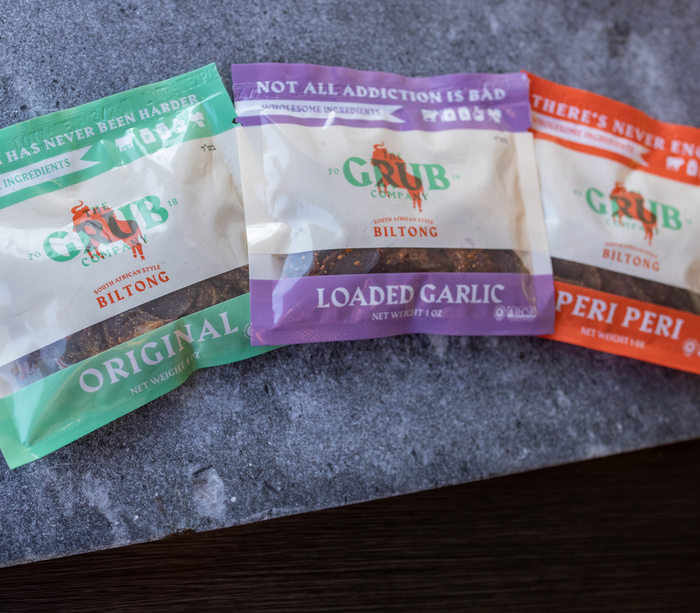
The Sliced Biltong Mini's start at $4.99. They are the entry point, a small bag, no commitment, good for figuring out which flavor you like before buying more. The Sampler Pack at $12.99 does this more deliberately: one mini bag each of Original, Peri Peri, and Loaded Garlic. If you have not tried all three flavors, start there. Peri Peri runs warm and bright. Loaded Garlic is deeper and more savory. Original is what it sounds like. The cure doing the work without a supporting flavor profile pulling focus.
Sliced Biltong at $11.99 is the everyday bag. Pre-sliced, ready to eat, consistent texture. Most people live here once they know their flavor.
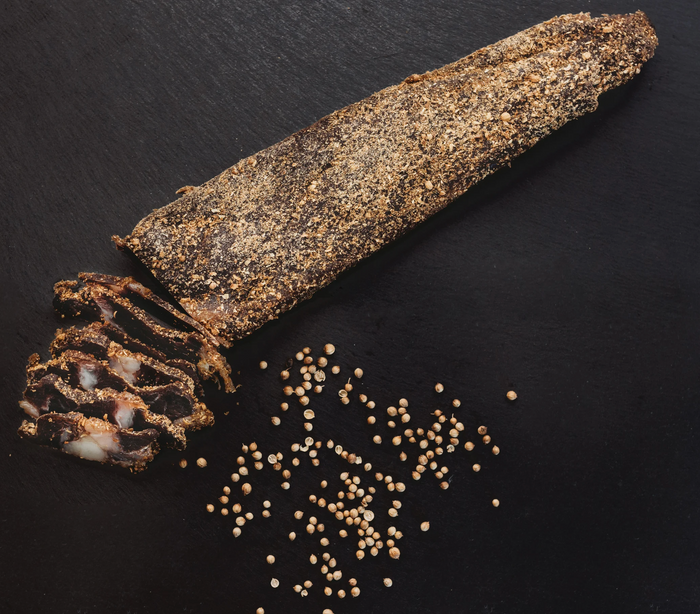
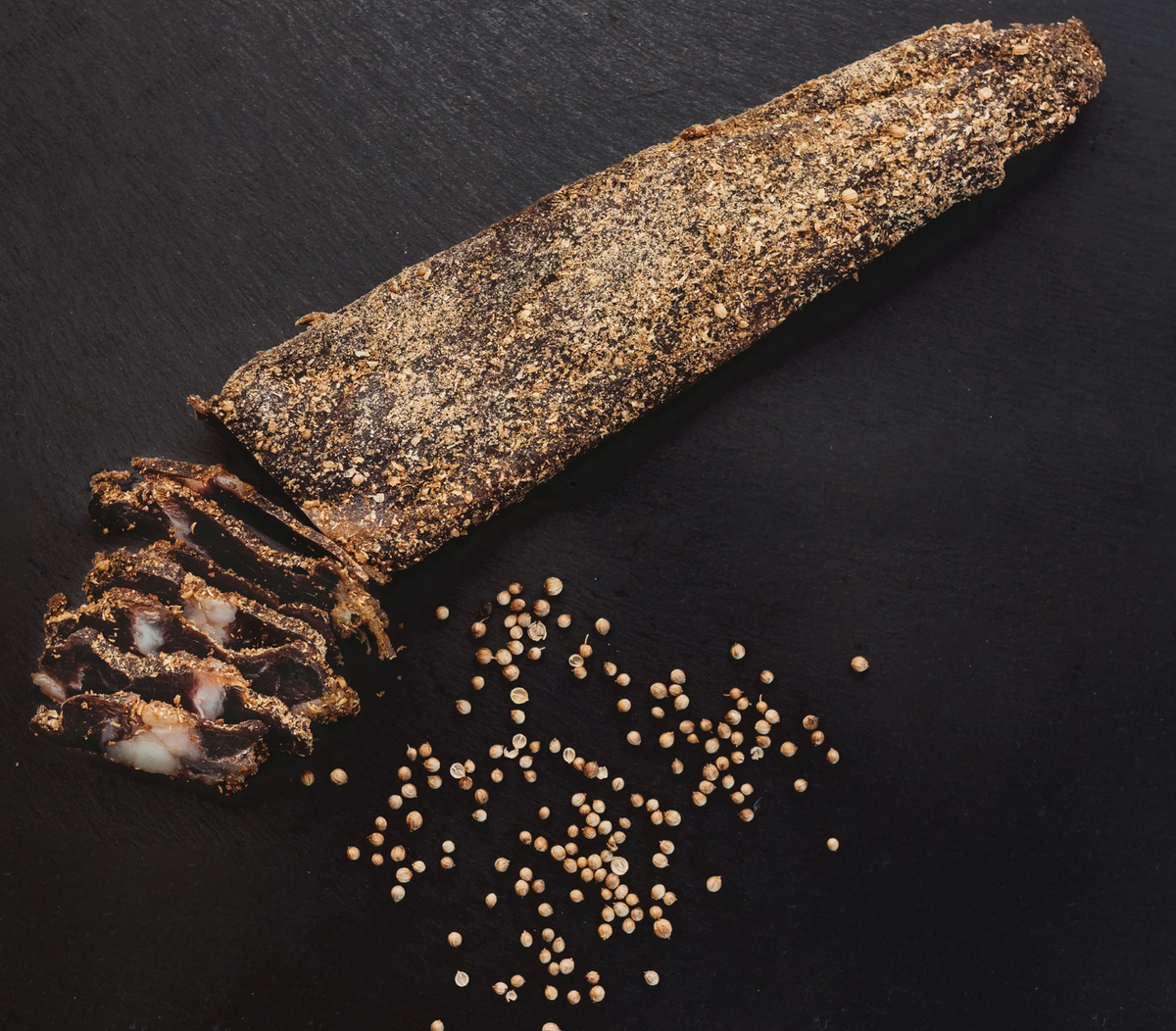
Biltong Slabs are different, and worth explaining properly. A slab is an unsliced piece of cured beef. You cut it yourself, as you eat it. That matters for a specific reason: when biltong is sliced before packaging, the cut surfaces begin oxidizing immediately. Flavor and texture both degrade from that point forward. A slab, left whole, preserves the enzyme activity inside the meat and keeps the flavor complexity intact until you actually cut into it. The difference between a freshly-cut slab and week-old pre-sliced biltong is real and noticeable.
The slab format comes at $58. Inventory is intentionally limited, we set aside only a handful per batch, which means orders sometimes take two to three weeks to ship. That wait is not a logistics problem. It is what small-batch production with careful sourcing looks like in practice. If you want slabs, order ahead of when you need them.
The Bulk Biltong option, one full pound of sliced biltong at $58, fills a different gap entirely. Caterers, delis, and buyers stocking for synagogue events have been underserved by the kosher snack market for a long time. Pre-portioned, certified, and available in quantity. That is what the bulk format addresses.
The Sodium Question: Why Kosher Biltong Cuts Differently Than Other Preserved Meats
Traditional kosher preserved meats rely heavily on salt. The koshering process itself draws blood through salt application, and many conventional kosher snack products carry that salt-forward profile all the way through to the final product. If you have eaten a lot of kosher deli or packaged kosher jerky, you know what that tastes like, clean protein, but a heavy sodium hit.
Biltong cures differently. The process uses vinegar and spices as the primary curing agents, with salt playing a supporting role rather than carrying the whole method. The result is a preserved meat with meaningfully lower sodium than what most kosher buyers are used to, without sacrificing shelf stability or flavor depth. The umami that builds during curing comes from the fermentation process and the spice profile, not from salt volume.
This is not a health claim about our specific product. It is a structural fact about how biltong curing works versus how salt-heavy preservation works. For someone who keeps kosher and has grown up eating heavily salted preserved meats as the only certified option, biltong reads as a genuine category shift, not just a different flavor of the same thing.
The Peri Peri and Loaded Garlic flavor profiles take this further. Both rely on spice complexity to build flavor, not on salt amplification. The spice sourcing for those flavors is more involved, each component gets audited individually as part of the certification process, but the payoff is a flavor profile that does not need a sodium crutch to land.
South African Curing Meets Modern Kashrut
Biltong has been made in southern Africa for centuries. The curing method predates modern kosher certification frameworks by a long stretch. For most of that history, biltong and kashrut existed in completely separate worlds.
What changed is demand. As observant Jewish communities in the US and elsewhere grew more interested in whole-food, minimally processed proteins, the gap between what was available and what they actually wanted became obvious. Standard kosher snack options, heavily processed jerky, mechanically separated poultry products dressed up with kosher labeling. Were not answering the question. Biltong, made properly, was a natural answer. Whole muscle beef, simple spice cure, no fillers.
Getting there required adapting a traditional South African product to a modern certification framework without compromising what makes biltong worth eating. That is a harder problem than it sounds. The vinegar, the spice blends, the beef sourcing, the production environment. All of it has to be clean at every step. Mass producers looked at that list and walked away. Small-batch producers who already cared about sourcing looked at the same list and saw it as a description of what they were already doing.
That is the honest origin of kosher biltong as a category. Not a marketing pivot. A genuine alignment between an old curing tradition and a set of dietary standards that happen to demand the same things a serious biltong maker was already providing.
If you are buying kosher biltong, you are buying from someone who could not take shortcuts even if they wanted to. The certification made sure of that. And the product is better for it.
Start with the Sampler Pack if you are new to the flavor range. Go straight to slabs if you already know what you like and want the best version of it. Order the bulk format if you are feeding a crowd. All three flavors, all three formats, certified, whole muscle, no fillers, from grass-fed beef that had to meet the same standard the certification did.
A few questions come up again and again before people place their first order. Here are the straight answers.
Frequently Asked Questions
Is all biltong kosher?
No. Standard biltong is made from beef, but kosher certification requires rabbinical supervision at every step, beef sourcing, slaughter, spice blends, and the production environment itself. Most commercial biltong producers use curing agents or shared facilities that would disqualify them from certification. Kosher biltong is almost exclusively a small-batch product for exactly this reason.
Why does kosher biltong cost more than regular biltong?
Three reasons. Grass-fed beef sourced under rabbinical supervision costs more than commodity beef. Individual spice audits for each flavor profile add sourcing overhead that bulk producers never deal with. And small-batch production, the only way to maintain clean certification, cannot spread fixed costs across the volume that brings prices down. The price reflects the actual cost of doing it right.
What is the difference between a biltong slab and sliced biltong?
A slab is unsliced. You cut it yourself as you eat it. Because the meat surface is not exposed until you cut, the enzyme activity inside stays intact and the flavor complexity holds longer. Pre-sliced biltong starts oxidizing at the cut surfaces from the moment it is packaged. For the best eating experience, slabs are the better format, with the trade-off that slab inventory is limited and orders can take two to three weeks to ship.
Which flavor should I try first?
Start with the Sampler Pack at $12.99. It includes one mini bag each of Original, Peri Peri, and Loaded Garlic. Original is the baseline: the cure and the beef, no supporting flavor profile. Peri Peri runs warm and bright. Loaded Garlic is deeper and more savory. Most people have a clear favorite after trying all three, and it is not always the one they expected.
Can I buy kosher biltong in bulk for an event or catering order?
Yes. The Bulk Biltong option is one full pound of sliced biltong at $58, certified kosher, and available for larger orders. It was built specifically for buyers stocking for synagogue events, delis, or catering setups where a small retail bag does not cover the need. If you are ordering a significant quantity, reach out before placing the order so we can confirm availability and timing.
How long does kosher biltong last once I open the bag?
Unopened, biltong keeps well when stored in a cool, dry place away from direct light. Once you open the bag, consume it within a few days for best flavor and texture, or transfer it to an airtight container. Slabs last longer than pre-sliced because the uncut surface limits oxidation, another practical reason to choose the slab format if you are not eating it all at once.
Is the Peri Peri flavor actually spicy?
It has genuine heat, not a token warmth, but a real peri peri chili presence. The spice sourcing is audited individually as part of the kosher certification, so what goes into the blend is consistent batch to batch. If you are heat-sensitive, start with Original or Loaded Garlic. If you like the bright, vinegar-forward heat that peri peri chili brings, that flavor was made for you.
Ready to pick one? Browse Biltong Bulk & Wholesale.