What to Send a Shiva House: Kosher Food That Keeps
The most useful food to send a shiva house is food the family does not have to think about: certified kosher, ready to eat, and able to sit on a counter for days. During shiva, the week of mourning, the community traditionally feeds the mourners. Casseroles and platters arrive in waves; what often runs short is simple, lasting food for the hours between. This guide covers what to send, and where shelf-stable kosher food fits.
Food and shiva
By tradition, mourners do not cook or host during shiva; others take care of them. The first meal after the funeral, the seudat havra'ah, is provided by friends and neighbors, often including round foods such as eggs and lentils, which symbolize the cycle of life. After that, meals and food arrive through the week, often coordinated by the community.
What to send
| Send | Why |
|---|---|
| A coordinated meal | Check first. Many communities run a meal schedule so the family is not overwhelmed |
| Shelf-stable certified food | Lasts the week and beyond; no fridge space needed |
| Fruit, pastries, cake | For visitors through the day |
| Paper goods and drinks | Always used |
Where dried beef fits
- It needs no fridge, which in a shiva house is always full.
- It is certified, so an observant family can use it without checking.
- It feeds the mourners in the quiet hours, late at night or early morning, when no one has thought about food.
- It keeps after shiva ends, when the meals stop and life is still hard.
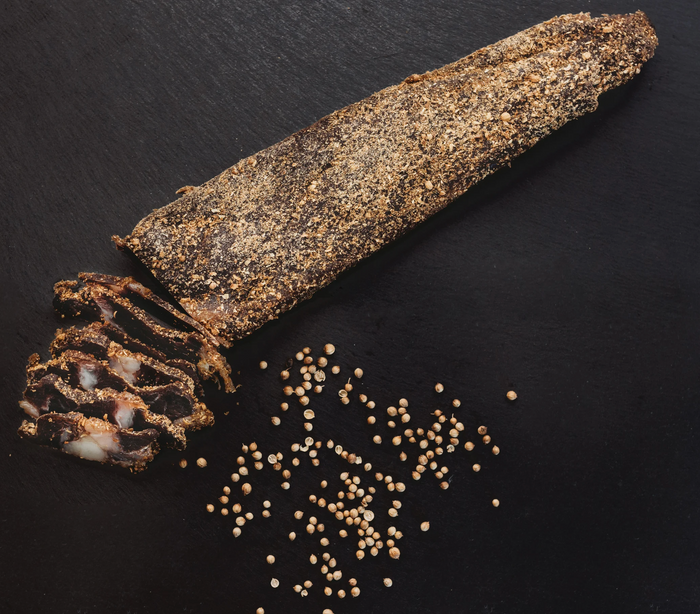
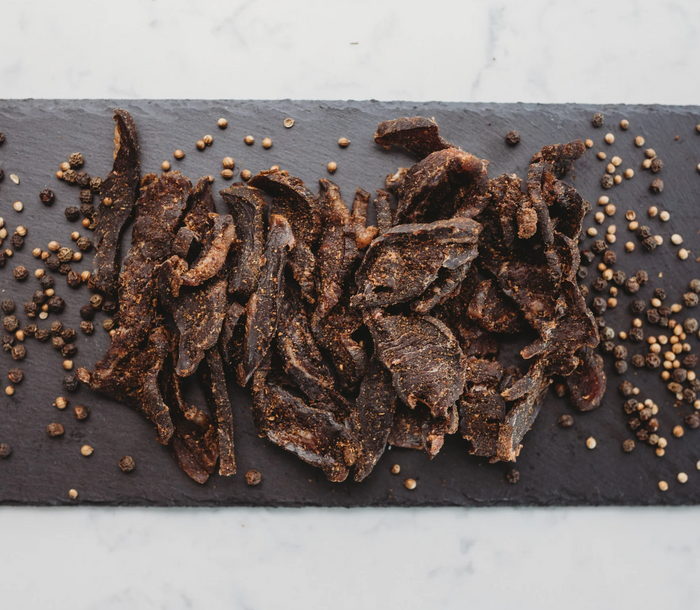
A few sealed bags of biltong or Meat Candy, or a sampler, is a modest, practical contribution alongside the meals. Mild flavors (Original, Loaded Garlic) are the thoughtful choice.
A few things to keep in mind
- Keep it plain. This is not a gift basket moment. No bows, no festive packaging.
- Meat and dairy. Shiva houses often have both kinds of food arriving. Label it as meat so it is not set out with dairy.
- Ask the coordinator. If a community is managing meals, check what is actually needed.
- Customs vary. Sephardi and Ashkenazi practices differ. Follow the family's lead.
Our kosher beef jerky and biltong are certified Glatt Kosher, and the certificates are published. US orders over $50 ship free.
What a shiva house actually needs
When someone sits shiva, the family is grieving, tired and receiving a steady stream of visitors. They are not thinking about lunch. What they need is for food, drinks and small practical things to simply be there, without anyone asking them to decide or host.
In practice that comes down to a few things:
- Meals at regular times, so no one has to remember to eat.
- Something to put out for visitors, because people come and go all day, and the family is not expected to serve them.
- Food that is easy to eat standing up, in a quiet corner, or at an odd hour.
- Disposable plates, cups, napkins and cutlery. Cleaning up is the last thing anyone wants to do.
- Room. Fridges and counters in a shiva house fill up fast. A gift that asks for neither is a kindness.
Food that needs no fridge and no reheating
Hot meals are wonderful, and the family will be grateful for them. But a hot dish asks for oven space, a warming tray, a serving spoon and a clean-up. Food that is ready the moment it arrives takes all of that away.
Good choices that need no refrigeration or reheating:
- Whole fruit, and cut fruit if it can be eaten that day.
- Baked goods such as rugelach, cake, cookies and challah or rolls.
- Nuts, dried fruit and crackers.
- Bottled water, juice and seltzer.
- Sealed, certified kosher savory snacks, for the hours when the pastries are not enough.
That last category is where many people run short. Sweet food arrives in abundance. Plain, savory, protein-rich food is harder to find at 11 at night. We cover how our own food fits in a section below.
Coordinating so the family is not flooded
The most common problem is not too little food. It is too much of the same food, all on the same day. Eight lasagnas on Monday and nothing on Thursday is a familiar story.
A few simple habits help:
- Ask first. Many communities, synagogues and families run a shared meal schedule. A quick message to the coordinator or a close relative tells you what is needed and when.
- Take a gap, not a slot everyone else wants. The first night is usually covered. Later in the week is where help thins out.
- Say what you are bringing, so others can choose something different.
- Think about the day after shiva ends. That is often when the meals stop and the house goes quiet. Food that keeps is welcome then too.
- Do not expect a thank-you. The family should not have to acknowledge each gift. Keep your note short and leave it at that.
Delivery timing and what to put on the note
Timing matters as much as the food. Some practical points:
- Do not ring the bell and wait. Mourners are not expected to greet people at the door. Many houses leave the door unlocked or have someone helping. Follow the family's lead, or drop food with the person coordinating.
- Avoid Shabbat and Yom Tov. An observant family will not accept a delivery then. If the family is observant, send it earlier in the week and do not rely on a Friday afternoon courier.
- Early in the day works well. Visitors tend to arrive later, so food that is already there can be put out.
- If you are shipping, allow time. Shiva lasts a set number of days. Order so the package arrives while it is still useful, and track it.
For the note, shorter is kinder. Something like:
- "Thinking of you and your family. No need to reply."
- Your name, and how you know the family.
- A line on the contents if it is meat, so it is not set out with dairy. For example: "Sealed beef snacks, certified Glatt Kosher."
Skip the cheerful sign-offs, the long memories and anything that asks for a response. The traditional words said to a mourner are brief, and a card can be too.
What not to send
- Anything that is not clearly kosher. Do not guess. A homemade dish from a kitchen the family does not know can end up unused, which is wasteful and awkward for everyone. When in doubt, send sealed, certified food.
- Food that needs a lot of attention. Raw ingredients, things that must be assembled, or dishes that must be eaten within an hour.
- A gift basket with a bow. Shiva is not a celebration. Plain packaging fits the week.
- Alcohol, unless you know the family wants it. Customs differ, so ask.
- Anything with a price tag or a loud logo. The gift is the care, not the brand.
- A double of what is already there. Ask what has arrived.
If you are not sure about a custom, such as what the family will or will not accept, ask the family or your rabbi. Practice differs between communities, and the family's own custom comes first.
Why kosher status matters
An observant family keeps kosher in the best of times, and grief does not change that. If food arrives without a certificate they recognize, someone has to look into it, or the food goes unused. At a time like this, even that small decision is a burden.
Certified food removes the question. For packaged food, look for a clear kosher mark on the package. For meat, remember it should be kept apart from dairy. Label what you bring so it is placed with the right foods. How long to wait between meat and dairy, and other details, are matters of family custom, so follow the household's lead.
Where Grub's shelf-stable food fits
We make certified Glatt Kosher biltong and beef jerky, air-dried and sealed in the bag. It is one option among several, not a replacement for a hot meal. It is useful because:
- It needs no refrigeration and no reheating.
- It is certified, and the certificates are published, so the family does not need to check.
- It is plain and savory, and works at any hour.
- It keeps in the pantry, so what is not eaten that week is still good later.
If you want to send some, a few bags of sliced biltong in Original are the safe choice, because the flavor is mild and suits most people. Our kosher beef jerky is sweeter, so Original biltong is the better fit for a house with mixed tastes. Pair it with fruit, baked goods and paper goods rather than sending it alone. US orders over $50 ship free, and shipping is US only.
Frequently Asked Questions
Should I send food at all, or make a donation instead?
Both are common, and neither is wrong. Some families ask for donations in the notice they send out. If they have, follow it. If they have not, food is a long-standing way to help. If you are unsure, ask a relative or the coordinator.
When is the best time to send food to a shiva house?
Early in the week is covered by the community, so the later days are often where help is needed. Send it so it arrives before visiting hours, and never on Shabbat or a holiday if the family is observant.
Do I need to know what kind of kosher the family keeps?
It helps. Standards differ between households, and some families only accept food from certain certifications. Sealed food with a clear certificate and a published list of certificates is the easiest to accept. When you cannot find out, ask a relative.
Is it fine to send meat?
Yes, as long as it is kosher and labeled as meat so it is kept apart from dairy. Many shiva houses receive both, so a clear label on the package helps. For anything about meat and dairy practice in that house, follow the family's custom.
What should I write on the card?
Keep it short. Say that you are thinking of the family, sign your name, and say that no reply is needed. Add a line on what is in the package if it is meat. Leave out anything that asks the family to respond.